The Blitz: An Introduction

Creating targets that were aimed at industrial centres, bombs were dropped with the intention to put a halt to war production, devastate the cities, and destroy civillian morale. However, in relation to morale, and the well-known "Blitz Spirit", it has been debated as to whether this was simply just a myth.
The Blitz began with a raid on London on 7 September 1940, the day was later named "Black Saturday". It began with an attack by 348 bombers, before being followed by a further 247 bombers who used the prior devastation to guide them and continue the bombing raid upon the city. Following this day, London would face a bombing raid almost every single night from mid-September up until mid-November. The civillians of this city would only be spared for one single night.
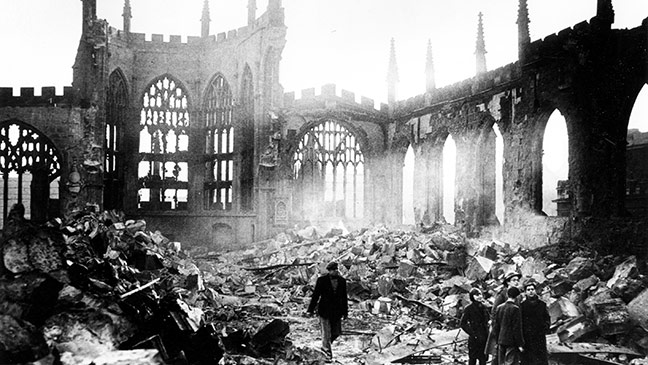
Some of the other cities which fell victim to the worst of these air raids were as followed; Cardiff, Hull, Coventry, Liverpool, Manchester, Plymouth, Sheffield, and Swansea. It is often forgotten, or not mentioned as much, that the North East faced their fair share of bombing raids, with Newcastle even experiencing its own Blitz. The North East was an important part in war production due to its history with shipbuilding and its shipyards, as well as its role in providing armaments for the war effort.
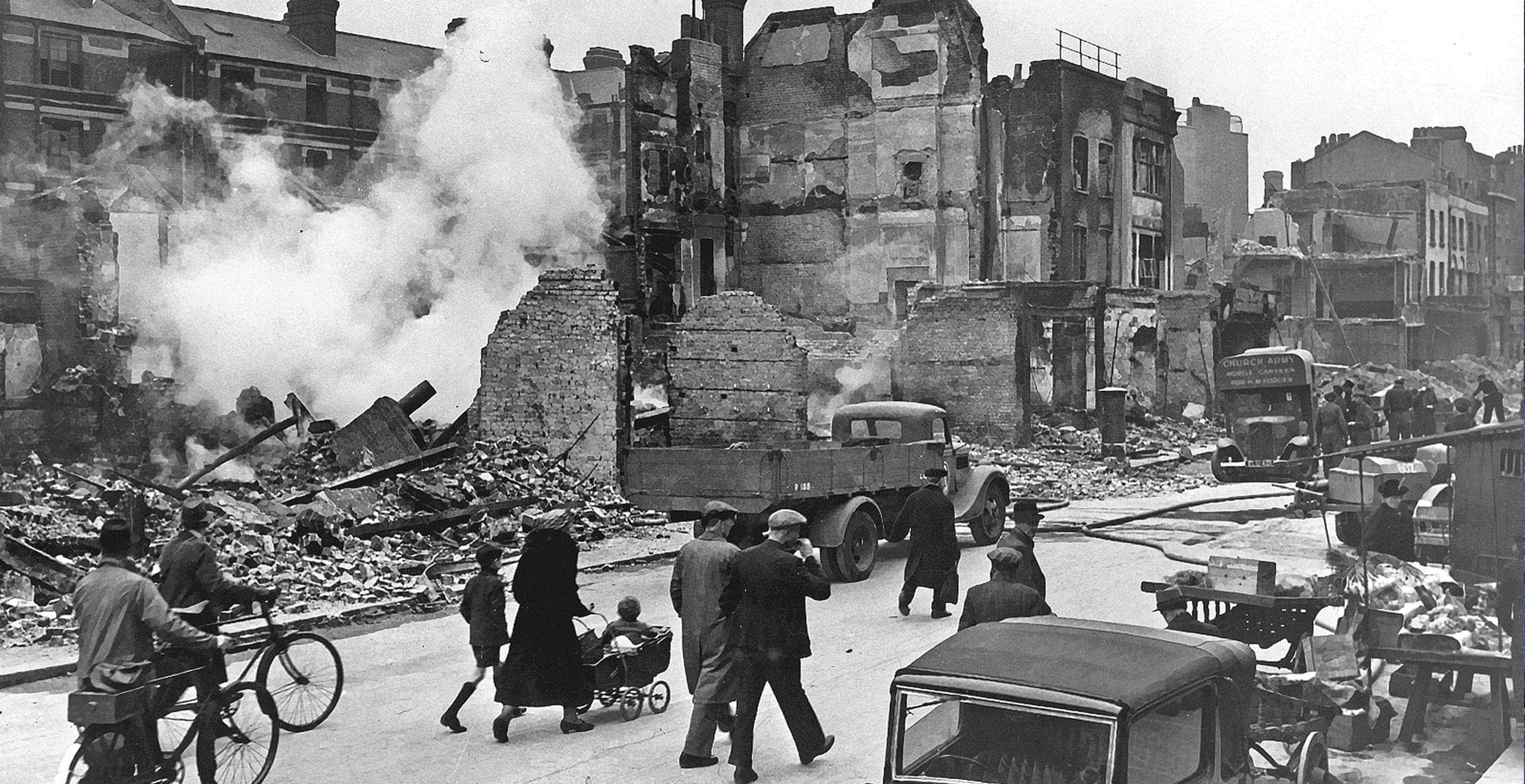
A devastating result occured during these many months of The Blitz. Thousands of civillans were killed (around 43,500), with further civillians being injured (around 87,000). Due to the high volume of bombs that had been dropped upon the country (somewhere around 50,000 tonnes of HEs (High Explosives) and around 110,000 incendiary bombs), an estimated 250,000 homes were destroyed and 2 million people were made homeless due to this.
Whilst the Blitz came to an end in May 1941, this was not the end for air raids on Britain. There was a continuation of this right through the following years of the war, although not on a scale as large as the Blitz. London would soon become victim of the V-1 and the V-2 rocket, ones that would not hit the rest of the country due to the fact they were launched from Europe, thus meaning they would not reach anywhere further than London. Ultimately leaving London to face yet another bombing attack.


Comments
Post a Comment