New Introductions to Britain during WWII
I thought it would be fitting to start my very first, new, blog off with a post about some of the new introductions that Britain saw during the Second World War. The war brought great change to the country, with many luxuries that were enjoyed before the war vanishing until years after the conflict had ended. Material changes were not the only changes that civillians saw, with various other lifestyle changes coming into effect throughout the 1940s.
Obviously, not every new introduction is going to be covered because then this post would be never ending. So, to start with, I have picked out a few.
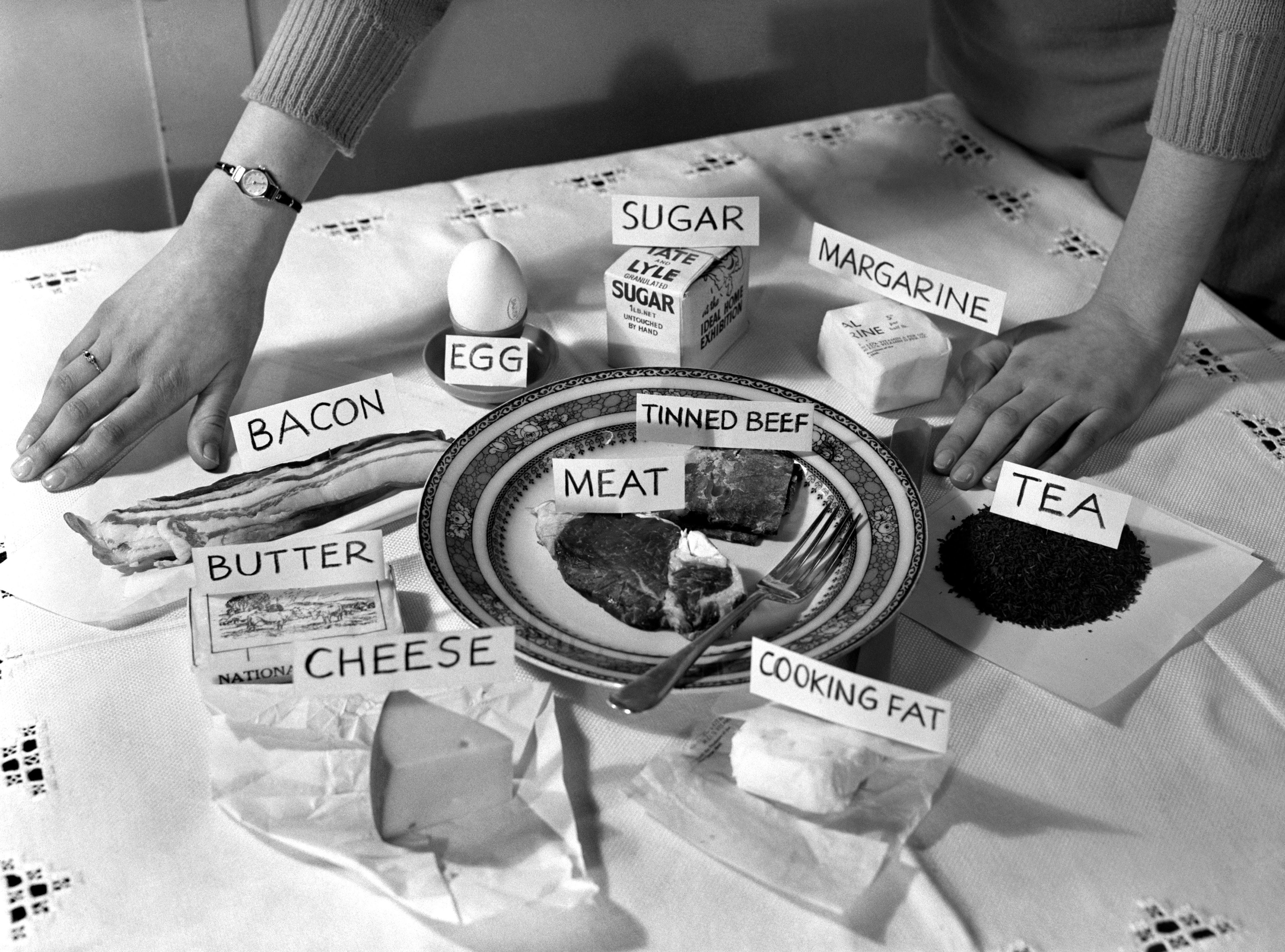
1) Rationing.
Hardly a surprise, really. But something I think is almost necessary to start with. With ever increasing naval attacks and bombardments on British supply ships, getting imports became difficult. Now, by all means, this was not the first time that britain had faced a period of ratioining. First introduced in 1918, towards the end of World War I, Britains saw their food supply increasingly diminish to the point where it was essentail for rationing to be introduced in order to prevent the countries civillians from starving.
When you look at the dates of WW1 (1914-1918), it is prevelant that these measures were implemented way too late. And the government knew that. So with WW2 looming, rationing was introduced much earlier in the war in January 1940.
With rationing and increasing food shortages on items that were in great supply before the war meant modifying recipies to fit the new situation civillians saw themselves in. And so, carrot "lollies" and carrot fudge became the new norm where normal sweets had since disappeared.
Food was not the only item that became rationed from 1940. Furniture and clothing also became victim of shortages. With these items becoming harder for individuals to get their hands on, the movement of 'Make Do and Mend' began. Stamps in ration books for clothing often meant that purchasing only a few items would take up the whole allowance for one year and so, sewing and and fixing your damaged clothing items become the new norm. Often, increasingly damaged items would be re-designed to fit a child.
Hardly surprising, and much like all things during the war, clothing rations decreased as the war progressed.

2) Changes to Society
As numbers of men, in their thousands, left home and headed for the front line, many jobs were left unfilled. And thus, jobs that were previously held by men were taken up by women. From 1941 onwards, women would step into jobs they had not before in positions such as factory workers, engineers, bus drivers, wardens, munitions workers, farmers and so on.
It is not to say that women had never done some of these jobs before, as they had prior to the war, however it was not seen in such a large scale until the war broke out and the men who worked these jobs were sent off to war when conscription was introduced alongside the war in 1939.
Many women were now working full day in dangerous positions, with various incidents happening that led to injuries and even worse, death. Women in factories faced a lot of these dangers, during air raids, some were sent to the underground shelters for protection. However, many were also permitted to continue with their work throught these times.
These women would not be allowed to go around with their uniform on show, proud of the work that they were doing. In fact, the work they were doing was to be kept to the upmost secrecy. A lot of these women would travel away from their homes, to live in other parts of the country here there was demand for female workers in ammunition factories. Instead, they would live in shared communal housing with other women who also worked in the same job sector.
Of course, many women stayed home and did not work these hard, dangerous jobs. They instead contributed their bit to the war effor by volunteering as parrt of the Women's Vouluntary Service. Originally set up to help with air raid precautions, it was eventually expanded to help with various other tasks that occured as a result of the war. They were then responsible for running emergency centres and helping with first aid for those who needed it, as well as helping with the evacuation and re-housing of those children sent from various cities within Britain that were at a high risk of being targetted by enemy aircraft.
Women were pivotal in helping with the war effort, and are arguably forgotten in how large of a role they actually played.

3) Evacuation
Evacuation was introduced as the fear of bombing continued to rise and the govevrnment's increased need to keep the population as safe as possible. The first wave took place 1 September 1939; before war had officially begun in Britain. Evacuation was carried out by mass numbers of volunteers, namely the Women's Voluntary Service (WVS), as well as the likes of teachers. These volunteers would help organise the children at stations, help them board their train as well as providing refreshments.
Children from areas that were deemed to be at high risk (these being big cities) were sent to the countryside in hope to save lives. Most of the families in the countrside were of middle and upper class as opposed to the working class families that were arriving in huge numbers. This shed a light on the poverty and the lower living standardsof those living in the cities. Due to these lower standards, many of the children being evacuated arrived with very little belongings and were not dressed in the best clothes.
Not all experiences were good upon entering the countryside. After arriving at the village hall, children would have to sit and wait for the host families to choose their child that they would look after for the duration of the war. The best presented cildren were the first to be chosen, and the most lower class, least presentable cildren would be left until the end, often going with families who had no choice but to take them. Whilst some children were placed with loving hosts, otherswere not so lucky. Many were used for manual labour and were part of tiring agricultural tasks.
Many children would return home by early 1940, after a phases known as the 'Phoney War' when no bombing raids were carried out on Britain. This did not last long as bylate 1940, children were once again evacuated as The Blitz began and cities were damaged by the constant falling of bombs. This would not be the last evacuation wave, however, as in 1944 when the V1 and V2 were dropped on London, children were once again sent to the countryside to keep them safe.

4) Pets
In Britain,1939, the "British pet massacre" took place. During this, 750,000 pets were killed. And this mass number was just in the first week. By the end of the war the numbers are said to be up to 2 million. Whilst many believed they were doing what was right for their pets, it eventually showed to be an unnecessary act.
This massacre of pets was to prepare the country for the shortages they were deemed to face. The government are said to have supported persecution of those who gve milk to cats. Another reason was because of a view that pets would go out of control once the air raid siren had sounded.
Air raids appeared to once again be cause for this extermination of pets. The Home Office had said that pets would not fit into the air raid shelters as there would simply be no room.
This was not always the case. Like children, animals were also evacuated. For those that could not be, stables and kennels were strengthened and made gas-proof in the event of a gas attack. For horses, air raid shelters were made specifically for them. An example of one of one of these was at Penn Street, Newcastle. This shelter accommodated eleven horses, however, it could only be used during daytime. Only being open during the day was a reoccurance with these shelters.

And that marks the end of four of the many changes to Britain during the course of the Second World War. Of course there was many others, and writing them all would take far too long and be a book of its own!
Most of these are well-known changes that took place, however they are important to remember as the people of Britain uprooted their lives and adapted to a change they could not simply ignore.


Comments
Post a Comment